Understanding Corneotherapy: A Key to Healthy, Resilient Skin
Understanding Corneotherapy: The Key to Healthy, Resilient Skin
If you’re a skincare enthusiast, you’ve likely heard about everything from exfoliation to resurfacing treatments promising quick results. But have you ever wondered if these approaches could be doing more harm than good? Enter corneotherapy, a skincare philosophy that’s all about nurturing your skin for long-term health.
Rather than aggressively stripping or resurfacing, corneotherapy focuses on protecting and supporting the outermost layer of your skin—the skin barrier. This approach promotes sustainable, radiant skin without relying on quick fixes that often come with downsides.
The Skin Barrier: Your Skin’s First Line of Defense
Let’s start with the basics. The skin barrier is your skin’s protective shield. Its main jobs?
1. Keeping irritants, bacteria, and pollutants out.
2. Locking moisture in.
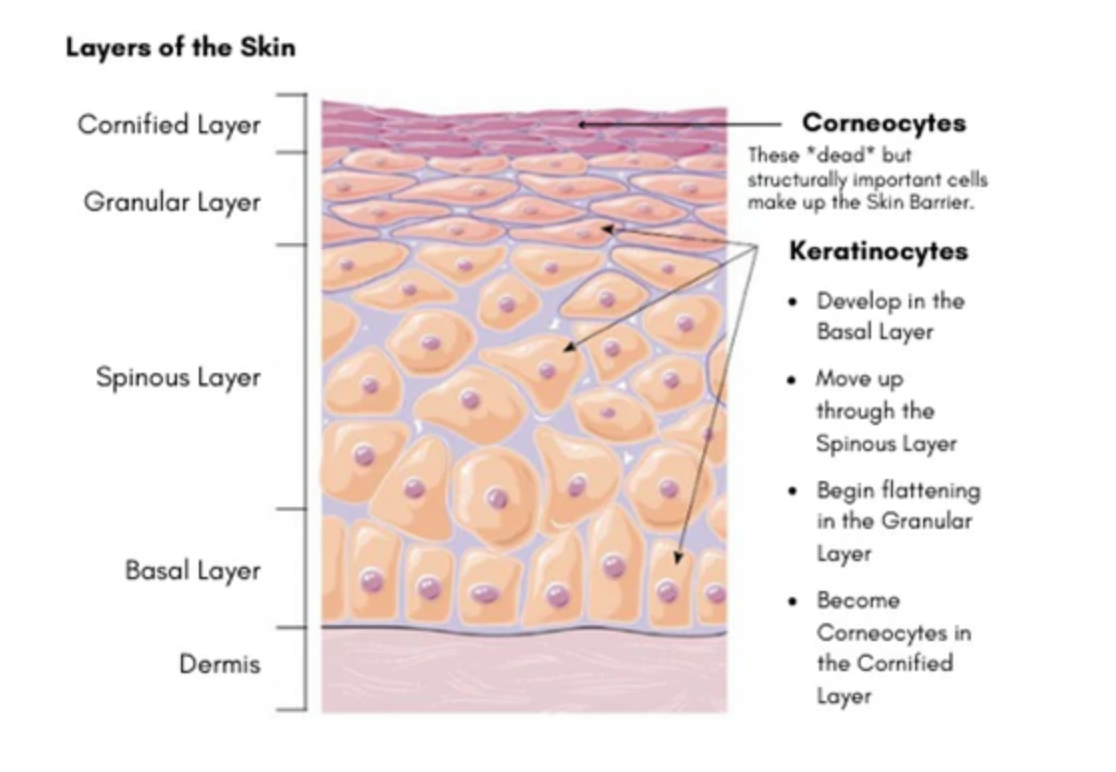
This barrier is made up of flat skin cells called corneocytes, surrounded by a mixture of natural fats and oils called lipids. Together, they form a structure often compared to a brick wall, where the corneocytes are the bricks, and the lipids are the mortar holding everything together.
Here’s a fun fact: those corneocytes don’t start out that way. They begin their lives much deeper in the skin as nutrient-rich cells called
keratinocytes, which are influenced by your internal health, diet, and hydration levels. As they move to the surface, they transform into corneocytes and form the skin barrier.
Why the Skin Barrier Is So Important
A healthy skin barrier doesn’t just keep your skin hydrated and glowing—it also plays a key role in reducing redness, irritation, and sensitivity. When the barrier is damaged (think dry, flaky skin or redness), the skin struggles to protect itself and retain moisture, leading to a host of issues.
What Happens When the Skin Barrier Is Compromised?
Ever noticed dry, flaky skin that feels tight or irritated? What you’re seeing are corneocytes shedding prematurely because the lipids that hold them together are out of balance. While exfoliation is often marketed as the solution, overdoing it can make things worse.
The Problem with Over-Exfoliation
Let’s talk about exfoliation—a skincare favorite. While removing dead skin cells can give you an instant glow, over-exfoliating is one of the biggest culprits behind damaged skin barriers. Many products and treatments claim that skin cells “pile up” as we age, slowing down cell turnover. But here’s the catch: Hydration—not excessive exfoliation—is what keeps skin cells turning over properly.
When we exfoliate too often, we strip away the very barrier that locks in hydration. This sets off a cycle where skin becomes drier, flakier, and more prone to irritation—ironically creating the very issues exfoliation is meant to solve.
Corneotherapy’s Approach: Support, Don’t Strip
Instead of constantly exfoliating, corneotherapy encourages us to focus on hydrating and strengthening the skin barrier. By giving your skin what it needs to function properly, you can achieve a healthy, glowing complexion without relying on quick fixes that might cause long-term harm.
Choosing Products That Support Your Skin Barrier
Here’s where it gets tricky: Not all skincare products are created equal. Many contain ingredients like harsh surfactants, certain oils, or emulsifiers that can disrupt the skin barrier over time. While these products might seem to work initially, they can lead to subclinical inflammation—a slow, sneaky form of irritation that shows up weeks or months later.
The best products for your skin barrier focus on mimicking its natural components, specifically the ideal ratio of ceramides, cholesterol, and fatty acids. These ingredients help replenish and maintain the barrier, keeping your skin hydrated, resilient, and healthy.
How to Spot Barrier-Friendly Skincare
When shopping for skincare, look for:
- Barrier-strengthening ingredients: Ceramides, fatty acids, cholesterol.
- Hydrating superstars: Hyaluronic acid, glycerin, or squalane.
- Gentle formulas: Avoid harsh surfactants, high concentrations of alcohol, or overly fragrant products.
Healthy Skin Starts with a Healthy Barrier
Corneotherapy teaches us an important lesson: Healthy skin doesn’t need to be “fixed” or aggressively treated—it needs to be supported.
By focusing on hydration, using barrier-friendly products, and avoiding over-exfoliation, you can give your skin what it truly needs to thrive. No harsh treatments, no quick fixes—just sustainable, healthy skin you’ll love for years to come.
Take a step back, give your skin the care it deserves, and let corneotherapy show you the way to radiant, resilient skin!