The Impact of Free Radicals: Understanding the Hidden Dangers to Our Health

Heather Angelo • October 23, 2024

Exploring How Unstable Molecules Contribute to Cellular Damage, Chronic Diseases, and Aging – And How Antioxidants Can Help

We've all heard of them but what are free radicals, how do they harm us and how can we combat them?  Free radicals are unstable molecules that can cause significant damage to our bodies through a process known as oxidative stress. Here's a closer look at how free radicals form, how they can harm our bodies, and the potential health implications: 


What Are Free Radicals?


  • Definition: Free radicals are atoms or molecules that have unpaired electrons, making them highly reactive. They can be generated through various natural processes in the body as well as from external sources.


  • Sources:
  • Internal Sources: Metabolic processes, immune responses, and inflammation can all produce free radicals.
  • External Sources: Environmental factors such as pollution, radiation, cigarette smoke, and certain chemicals can contribute to free radical formation.


How Free Radicals Harm the Body


Cell Damage:

  • DNA Damage: Free radicals can attack and damage DNA, potentially leading to mutations and increasing the risk of cancer.
  • Lipid Peroxidation: They can react with lipids (fats) in cell membranes, causing cell membrane damage and loss of cell integrity. This process can lead to cell death or malfunction.
  • Protein Damage: Free radicals can also modify proteins, affecting their structure and function, which can disrupt cellular processes.

Oxidative Stress:

  • When the balance between free radicals and antioxidants (substances that neutralize free radicals) is disrupted, oxidative stress occurs. This can lead to widespread cellular damage and contribute to various diseases.

Chronic Diseases:

  • Cardiovascular Diseases: Oxidative stress is linked to the development of atherosclerosis (hardening of the arteries) and heart disease.
  • Cancer: DNA damage caused by free radicals can lead to mutations and the initiation of cancerous growths.
  • Neurodegenerative Disorders: Conditions like Alzheimer's and Parkinson's disease have been associated with oxidative stress and free radical damage to neurons.
  • Diabetes: Oxidative stress can contribute to insulin resistance and complications associated with diabetes.

Aging:

  • The accumulation of oxidative damage over time is thought to play a significant role in the aging process, leading to age-related decline in bodily functions and increased susceptibility to diseases.
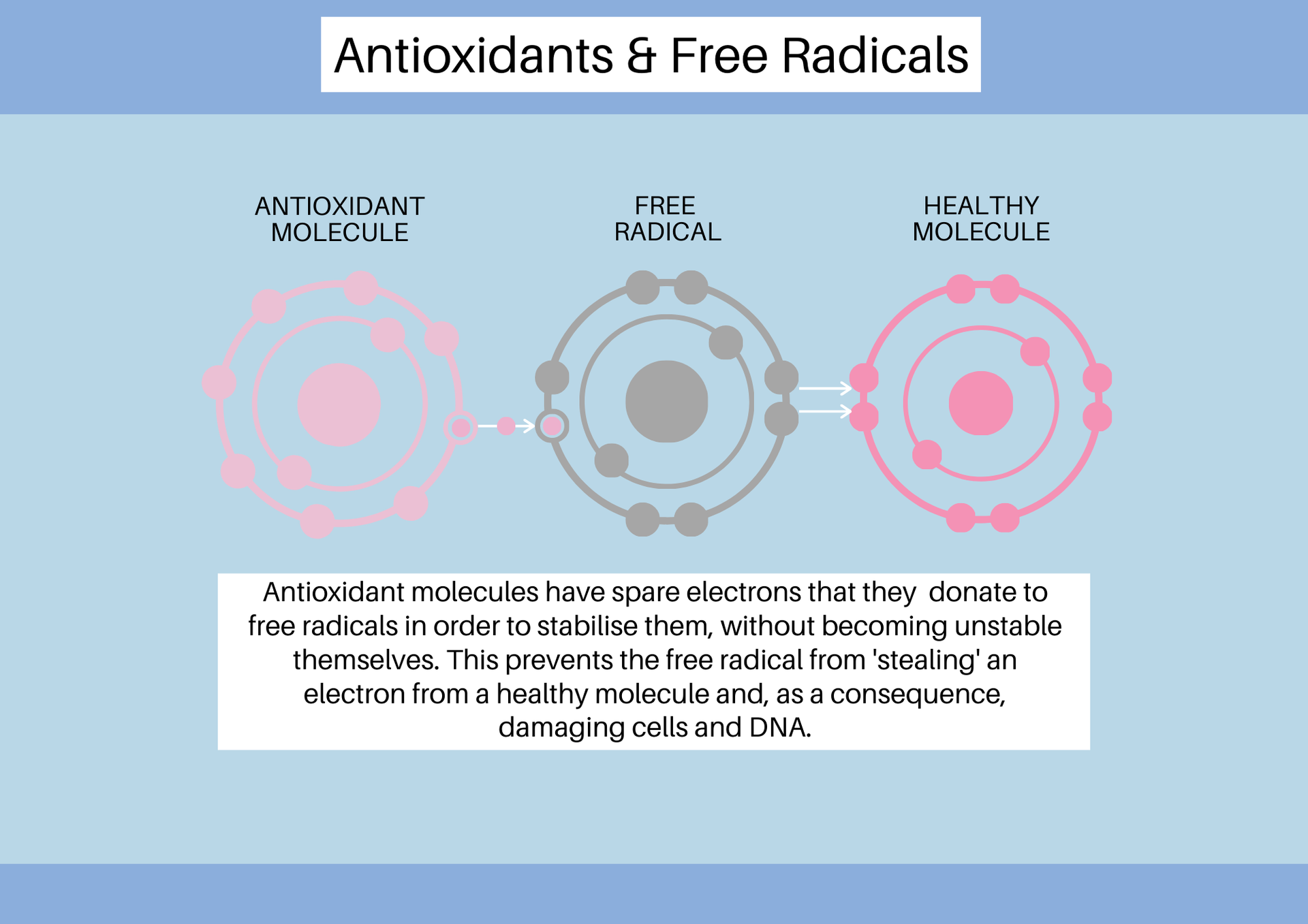


Antioxidants and Free Radicals

Antioxidants: The Defense Against Free Radicals


Thankfully, there is a way to combat free radical damage.  Antioxidants!  Antioxidants are substances that can neutralize free radicals and help protect the body from oxidative stress. They can be found in various foods, particularly fruits and vegetables, nuts, seeds, and whole grains.  Hydrogen-rich ionized water also produces an exceptional amount of antioxidants.  Here are some common foods high in antioxidants:


  • Vitamin C: Found in citrus fruits, strawberries, and peppers.
  • Vitamin E: Found in nuts, seeds, and green leafy vegetables.
  • Beta-Carotene: Found in carrots, sweet potatoes, and spinach.
  • Selenium: Found in Brazil nuts, fish, and eggs.
  • Polyphenols: Found in tea, coffee, berries, and red wine.
  • Kangen Water:  An FDA approved medical device that creates hydrogen rich ionized water


It is imperative we maintain a balanced diet rich in antioxidants, along with a healthy lifestyle, to stave off the damage caused by free radicals. 


Curious to learn more about Kangen Water and the Enagic Water Ionizer? For personalized information, feel free to reach out to Heather at 443.688.2311 or email heather@quietwatersesthetics.com. Embrace the power of Kangen Water and enhance your health today!


Call Us
By Quiet Waters Esthetics February 12, 2026
Discover cost-saving tips for skincare treatments in Millersville, MD. Maximize your beauty budget without compromising on quality.
By Quiet Waters Esthetics February 6, 2026
Discover key signs indicating when it's time to seek professional skincare treatments in Millersville, MD.
generic skin care bottles
By Heather Angelo February 3, 2026
Confused by acne ingredients? Learn what really works, how to use it, and how to support your skin without overdoing it.
By Quiet Waters Esthetics January 27, 2026
Discover the latest trends and innovations in skincare treatments available in Millersville, MD. Stay ahead in your skincare routine.
By Quiet Waters Esthetics January 20, 2026
Discover essential skincare treatments for beginners in Millersville, MD. Learn basics and start your skincare journey today!
By Quiet Waters Esthetics January 14, 2026
Discover beginner-friendly skincare tips from Quiet Waters Esthetics in Millersville, MD. Achieve a glowing complexion at home.
Close-up of a person's face with red acne spots; a hand touches the cheek.
By Heather Angelo October 7, 2025
By Heather Angelo, Licensed Esthetician & Acne Specialist Quiet Waters Esthetics | Annapolis, MD
A person is holding a bottle of niacinamide in their hand
By Heather Angelo December 17, 2024
Achieving clear skin can often feel like an uphill battle, but with niacinamide for acne treatments, you're not alone in your journey to a glowing complexion. This powerhouse skincare ingredient, also known as vitamin B3, is celebrated for its ability to reduce inflammation, minimize pores, and regulate oil production. These benefits make it a go-to solution for those battling persistent breakouts. Whether you're a skincare novice or a seasoned pro, incorporating niacinamide into your routine can be a game-changer. Gentle yet effective, it offers a promising solution for achieving clear, healthy skin. In this guide, we’ll explore the benefits of niacinamide for acne, share expert insights, and provide practical tips to help you unlock the radiant skin you deserve. Let’s embark on this skin-loving journey together and embrace the confidence that comes with a blemish-free complexion.
A woman 's face before and after being treated for dry skin.
By Heather Angelo December 2, 2024
Understanding Corneotherapy: The Key to Healthy, Resilient Skin If you’re a skincare enthusiast, you’ve likely heard about everything from exfoliation to resurfacing treatments promising quick results. But have you ever wondered if these approaches could be doing more harm than good? Enter corneotherapy, a skincare philosophy that’s all about nurturing your skin for long-term health. Rather than aggressively stripping or resurfacing, corneotherapy focuses on protecting and supporting the outermost layer of your skin—the skin barrier. This approach promotes sustainable, radiant skin without relying on quick fixes that often come with downsides. The Skin Barrier: Your Skin’s First Line of Defense Let’s start with the basics. The skin barrier is your skin’s protective shield. Its main jobs? 1. Keeping irritants, bacteria, and pollutants out. 2. Locking moisture in. This barrier is made up of flat skin cells called corneocytes , surrounded by a mixture of natural fats and oils called lipids. Together, they form a structure often compared to a brick wall, where the corneocytes are the bricks, and the lipids are the mortar holding everything together. Here’s a fun fact: those corneocytes don’t start out that way. They begin their lives much deeper in the skin as nutrient-rich cells called keratinocytes , which are influenced by your internal health, diet, and hydration levels. As they move to the surface, they transform into corneocytes and form the skin barrier.
A woman is smiling while applying a serum to her face.
By Heather Angelo November 11, 2024
Navigating the world of skincare can be overwhelming, especially when it comes to choosing the right retinoid. If you've ever found yourself wondering what the difference is between retinol, retinal, and granactive retinoid—or if any of them are even right for you—you're not alone! Retinoids are among the most powerful ingredients for acne treatment and anti-aging, yet they vary widely in strength and effect. Let's break down everything you need to know about retinoids, so you can confidently select the one that fits your skincare needs. Retinoid vs. Retinol: What’s the Difference? You might see the terms "retinoid" and "retinol" used interchangeably, but there’s a difference. "Retinoid" is an umbrella term for all vitamin A-based ingredients that work on skin receptors. Retinol is just one type of retinoid. Other types include retinal, tretinoin, adapalene, and retinyl palmitate. How Do Retinoids Vary in Strength? Retinoids range in strength, which affects how intense they are on the skin. Here’s a simple rundown: - Milder retinoids, like retinyl palmitate, are low in potency and often work more gently on the skin. - Retinoic acid is the strongest option available and can directly act on the skin’s receptors without needing conversion. The main thing to remember is that most retinoids have to convert into retinoic acid to work. The more conversion steps required, the lower the potency. So, a gentler retinoid might be best for sensitive skin, while stronger options may be more effective for people with tougher skin concerns. Choosing the Right Retinoid for You Whether you’re dealing with acne, fine lines, or uneven skin tone, there’s likely a retinoid that can help. It’s just about finding the strength and type that best suits your skin’s needs. So take your time, and don’t worry—retinoids can be a powerful addition to your routine with the right fit!